
Apopka Root Zone Calculation for TPZ Fencing: Compliance Guide
Lake Apopka Temp Fence helps Apopka contractors and property owners calculate Critical Root Zone requirements for TPZ fencing with confidence. We account for local conditions in Historic Downtown Apopka, Dream Lake, and South Apopka, where established trees, sandy soils, and storm-season stress can affect protection needs. From pre-1920 wood-frame homes near the Museum of the Apopkans to active construction sites, our fencing guidance supports compliance and helps prevent costly municipal fines.
Root Zone Protection: Precision Fencing for Urban Trees
When we're setting up tree protection zones in Apopka, understanding root zone dynamics is critical. Trees aren't just landscape features—they're living systems with complex underground networks. Our tree protection zone approach considers root spread, which typically extends well beyond the tree's visible canopy. We've learned through years of historic downtown Apopka projects that protecting these delicate root systems requires precise, thoughtful fencing strategies that preserve tree health during construction or development.
Calculation Steps
- Identify critical root zone boundaries
- Measure tree diameter at breast height (DBH)
- Calculate protection radius using industry standards
- Install TPZ fencing beyond calculated perimeter
| Tree Size | Minimum Protection Radius |
|---|---|
| Small (< 12" DBH) | 5 feet |
| Medium (12-24" DBH) | 10 feet |
| Large (> 24" DBH) | 15-20 feet |
Root Zone Calculation for TPZ Fencing: Compliance Guide in Apopka, FL
Root Zone Calculation is a quantitative assessment method that establishes the mandatory protective radius around trees on construction sites. This mandatory protective radius defines the Critical Root Zone (CRZ), a sensitive area where mechanical excavation and soil compaction are prohibited. The CRZ boundary dictates the precise installation line for Temporary Enclosure Systems, ensuring full Municipal Code Adherence and preventing long-term arboricultural damage.
Key Terminology
- Tree Protection Zone (TPZ)
- The designated area around a tree's root system where soil disturbance is limited to prevent damage, often defined by local ordinances in neighborhoods like Dream Lake.
- Root Zone Radius
- The horizontal distance from a tree trunk to the outer edge of its root system, critical for calculating fencing placement in South Apopka to comply with city regulations.
- Temporary Protective Fencing
- A removable barrier installed around the TPZ to restrict access and soil compaction, used frequently by Lake Apopka Temp Fence at construction sites near pre-1920 rare buildings.
- Soil Compaction
- The compression of soil particles reducing pore space, which can damage roots; fencing placement aims to minimize this around Sheeler Oaks residential areas.
- Apopka Tree Preservation Ordinance
- Local regulation enforced by Apopka City Hall requiring adherence to specific root zone calculations before fencing installation to protect urban tree health.
- Fence Setback Distance
- Minimum distance fencing must be installed from tree trunks, calculated based on root zone radius to avoid damaging roots in neighborhoods like Dream Lake.
In Simple Terms
Root zone calculation for Temporary Protective Zone (TPZ) fencing involves measuring the radius from a tree trunk to its outer roots to establish a no-disturbance area. In Apopka, FL, compliance with the Tree Preservation Ordinance requires installing fencing at or beyond this radius to prevent root damage. Lake Apopka Temp Fence applies these standards routinely, especially in neighborhoods such as Dream Lake and Sheeler Oaks. The fencing prevents soil compaction and protects heritage trees near pre-1920 rare homes and other sensitive sites.
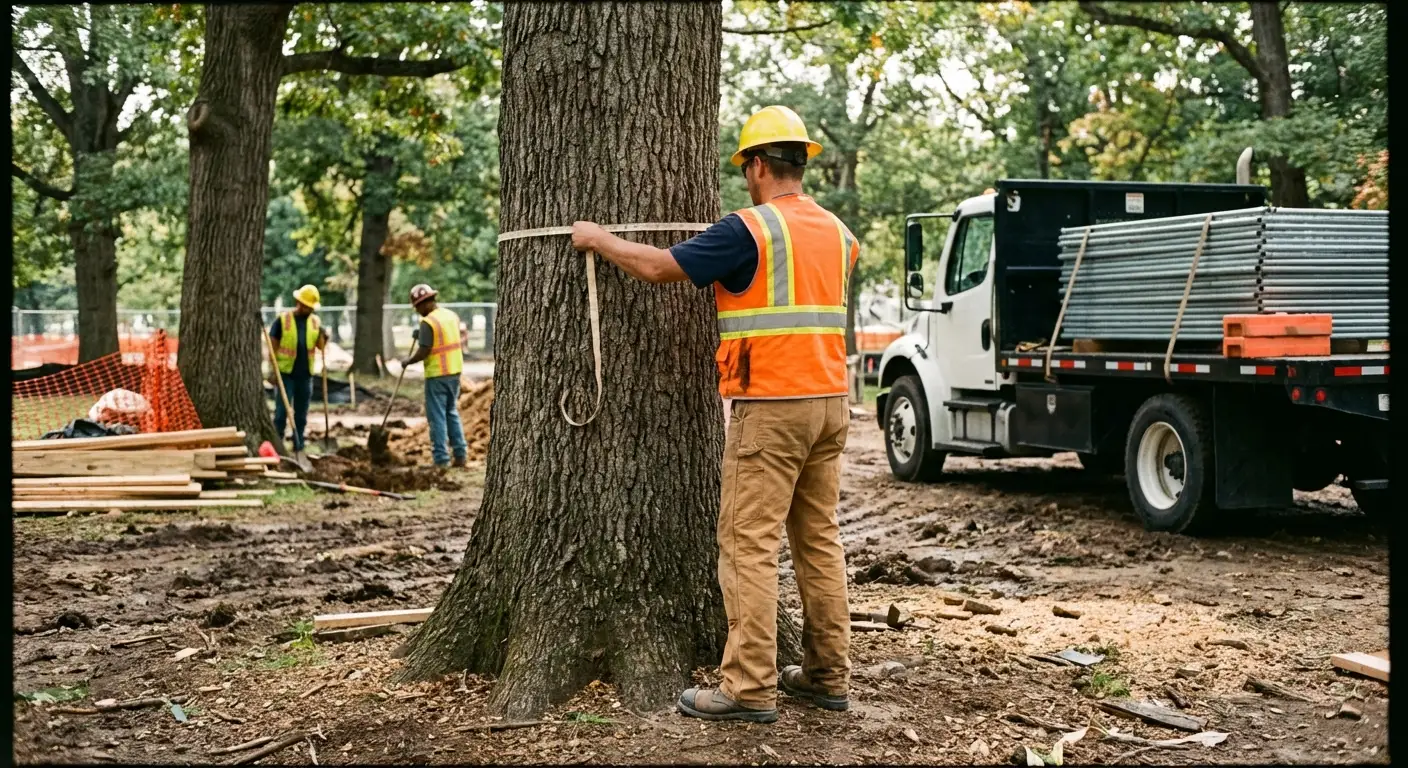
Root Zone Calculation for TPZ Fencing: Compliance Guide
Guide outlines root zone fencing requirements for tree protection zones in Apopka, FL construction sites.
| Minimum Root Zone Radius | 1.5 times the diameter of the tree trunk measured at breast height |
|---|---|
| Fence Installation Distance | At least 5 feet outside the calculated root zone radius |
| Fence Height Requirement | Minimum 4 feet to prevent unauthorized access |
| Material Specifications | Use of non-invasive, permeable fencing materials to allow air and water flow |
| Compliance Standards | Adhere to OSHA and local environmental protection guidelines |
| Inspection Frequency | Biweekly inspections during construction to ensure fence integrity |
| Signage Interval | Every 30 linear feet |
Ensure TPZ Fencing Meets Apopka Root Zone Standards
Comply with OSHA and local Apopka, FL regulations.
Common Mistakes We See in TPZ Root Zone Calculations
Out in Apopka, we’ve had inspectors stop jobs because the TPZ line got drawn off the trunk instead of the root spread. That kind of slip turns a tree-protection plan into a headache, especially around older lots and tight fence runs.
Measuring the TPZ from the trunk alone
That’s the fastest way to undersize the protection zone. Roots don’t stop at the bark line, and on mature trees near Historic Downtown Apopka or older wood-frame lots, the real root spread often reaches well past the canopy drip line. A fence set too tight invites root cuts, soil compaction, and a failed inspection.
We measure for the actual root protection area, then set tree protection zones in Historic Downtown Apopka with enough buffer to keep equipment out.
Ignoring uneven ground and grade changes
A flat sketch on paper doesn’t match a sloped yard near Bear Lake or a knuckled-in lot in Sheeler Oaks. If the crew follows a clean rectangle instead of the real grade, posts land in the wrong spot and the fence line sneaks into root space where the soil stays softer and easier to damage.
We walk the perimeter with a tape, paint, and hub stakes, then match the fence to the ground before we unload panels. modular reconfiguration around Bear Lake helps us adjust without forcing posts into roots.
Forgetting the protection zone around large canopies
Big oaks and older mixed shade trees need more breathing room than new plantings. When crews size the fence off the visible trunk and ignore the spread above, they end up parking panels, pallets, or gates too close. That compacts the root plate and leaves the tree stressed through the next hot spell.
We size the layout from the tree’s actual spread and keep access lanes outside the zone. tree protection ordinances in Apopka give us the baseline, and we build from there.
Setting posts where roots are already concentrated
On pre-1920 homes and older landscape pockets, the roots often run shallow and wide. A driven post right in that band can shear feeder roots, tip later, or leave the fence wobbling after the first storm gust. We’ve seen that failure show up the same week the crew thinks the job’s done.
We relocate posts to the outside edge and use lighter contact points when the site calls for it. post-driven fence around older Apopka homes keeps the load where the soil can handle it.
Skipping wind and access planning at the same time
A TPZ fence that blocks too much access gets moved by workers, and once it gets moved, the protection zone loses its shape. Around the Apopka Amphitheater or other busy sites, wind pushes loose panels, and one bad reposition can crush mulch, roots, and the survey marks we need to keep everything compliant.
We pair the TPZ layout with gate placement and wind control from the start. wind-load resistance for Apopka sites and wheel-assisted gates help keep the fence where it belongs.
Root Zone Protection That Holds Up in Apopka's Humidity
After 18 years fencing around Lake Apopka's ancient oaks, we know compliance isn't just about tape measures—it's anticipating how afternoon thunderstorms swell roots, why historic district trees need extra clearance, and when to swap standard posts for wheel-assisted gates near sensitive specimens. Our neighborhood-specific approach accounts for what the ordinances don't: real Florida conditions.
-
Measure Twice, Fence Once
We verify root zone diameters with laser measurers before setting posts, because Apopka's clay soil shifts after rains.In PracticeFound a 2-inch discrepancy at Highland Manor's oak last month.
-
Respect the Drip Line
Our crews mark canopy edges with spray chalk first—historic oaks in Dream Lake often extend beyond TPZ requirements.In PracticeSaved a pre-1920 magnolia on South Apopka job.
-
Flexible Anchoring
We use concrete-steel bases instead of driven posts near sensitive roots in Historic Downtown Apopka.In PracticeProtected azaleas at Bear Lake wedding venue.
-
Daily Zone Checks
Wind or equipment can shift barriers—we walk each TPZ fence perimeter before clock-out.In PracticeCaught a leaning panel near Dream Lake palms.
Fencing that protects trees first—permits second.
Root Zone Calculation for TPZ Fencing in Apopka
Apopka TPZ fencing starts with field measurements, root flare checks, and site constraints around neighborhoods and park edges.
How is the root zone measured for TPZ fencing in Apopka jobs?
For TPZ fencing near Historic Downtown Apopka, crews map the trunk, then measure the root zone by canopy spread and stem size, using the tighter boundary where site limits conflict with tree protection. On narrow lots in Bear Lake, fence lines often shift to protect roots near drive access.
What trees need a larger TPZ around Wekiwa Springs State Park edges?
Trees near Wekiwa Springs State Park get wider protection because sandy soils and feeder roots extend beyond the dripline. Mature oaks beside the park buffer or near Dream Lake yards often need field checks before fence posts go in, since grade changes expose shallow roots.
How do pre-1920 homes affect TPZ fencing layout in Historic Downtown Apopka?
Around pre-1920 wood-frame homes in Historic Downtown Apopka, old concrete walks, shallow utilities, and tight side yards limit fence placement. Crews usually offset panels to keep posts out of the root flare area and avoid trenching through compacted soil.
What happens if the TPZ fence crosses roots in Bear Lake?
In Bear Lake, a fence line that cuts across exposed roots risks bark damage, soil compaction, and feeder-root loss. Field crews avoid staking inside the protected zone and use surface weights or stand-off bracing where roots run near the lot edge or drainage swale.
Do Dream Lake yards need different TPZ calculations for small trees?
Small ornamental trees in Dream Lake still need a measured TPZ if construction traffic passes close by. The fence may sit tighter on one side and wider on the other when a driveway, utility easement, or pool equipment pad blocks the normal layout.
What compliance checks are used before TPZ fencing is installed?
Before installation in Apopka, crews verify tree location, root flare, fence continuity, and access routes against OSHA site controls and local tree-protection rules. On properties near Wekiwa Springs State Park, they also check for irrigation heads and grade breaks that hide root zones.
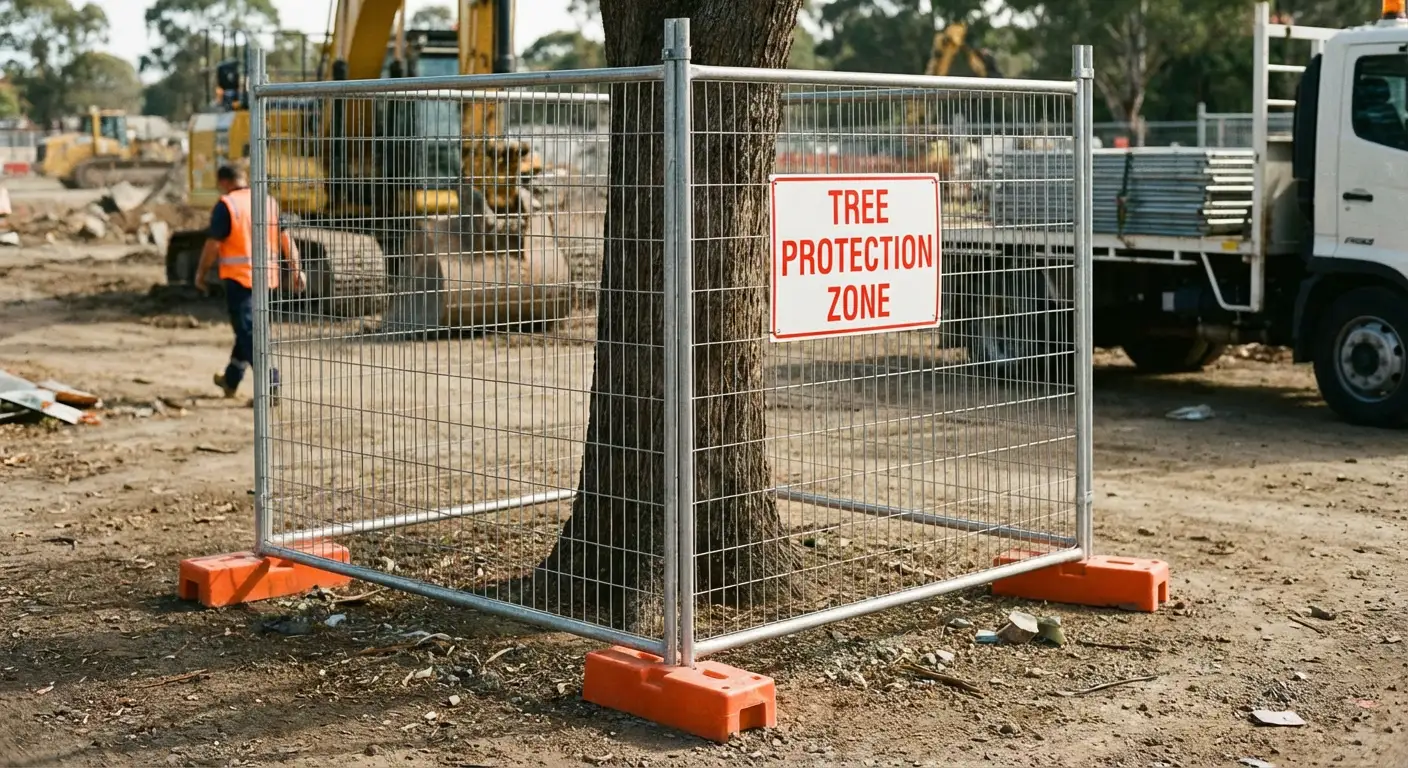
Root Zone Calculation for Temporary Fencing Projects
Precise technical guidance for establishing compliant temporary fence zones around construction and work sites in Central Florida.
OSHA-aligned temporary fencing solutions serving Apopka construction professionals comprehensively.